The technology
We learned to make things. We are only starting to learn to unmake them
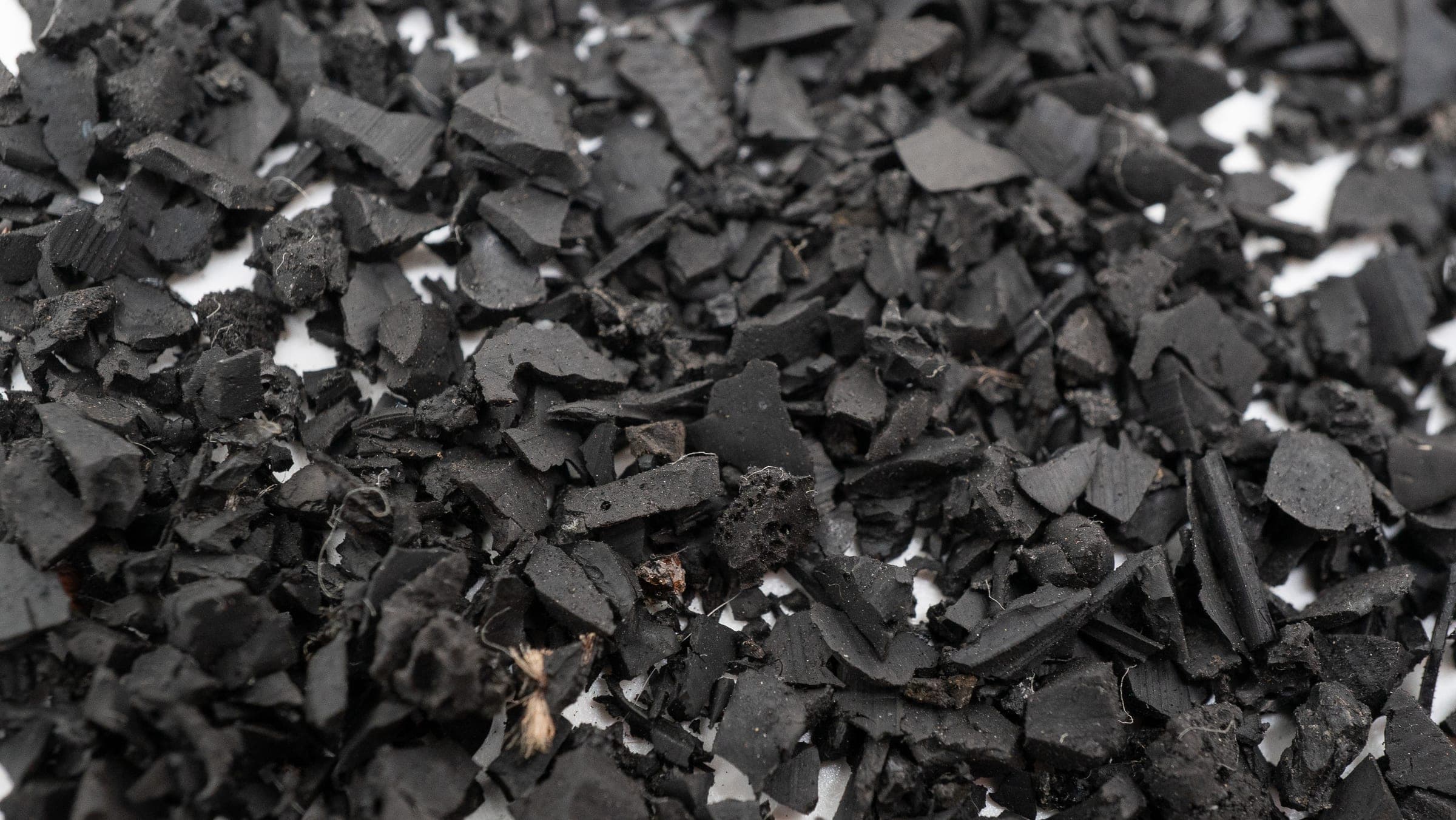
A product is a set of materials, each one chosen for what it does, bonded together so the product lasts. That bonding is what makes it durable, and at end of life it is what makes it a mixture. Where the materials separate cleanly we can already recover them. Where they do not, what comes back is worth less than what went in.
Why it is hard
Apart, or intact
Taking a tyre apart usefully means two things at once: the materials have to come apart, and they have to still be what they were. Grinding, devulcanisation and pyrolysis each manage one of the two. None of the three can tell one bond from another: a mechanical, chemical or thermal route acts wherever it reaches.
Grinding
Steel and textile come out. A fracture crosses backbone and crosslink alike, but only where it lands, and either side of it the network is untouched.
- The polymer
- Whole, still locked
- Separated
- No
Devulcanisation
The sulphur crosslinks are the weakest bonds in the network, so they go first. Not only them: the backbone is sometimes cut as well, and the filler stays where it was.
- The polymer
- Loosened, and cut
- Separated
- No
Pyrolysis
Heat decomposes the rubber into oil and gas. The filler leaves as a solid char, carrying the tyre's inorganics with it.
- The polymer
- Fully broken down
- Separated
- Yes
The platform
Targeted cleaving of the polymer
An enzyme acts on one bond, at one point, and ignores everything else around it. Nature has been taking matter apart this way, and putting the parts back to use, for billions of years. It has never been pointed at the materials we make, because nature never met them: vulcanised rubber, cured composites and engineered thermoplastics were all invented inside the last two centuries.
So we point it at them. Other things can break these bonds, but no route in industrial use breaks them selectively. An engineered enzyme acts at defined points and leaves the rest of the material intact, which is what force cannot do. What is released is still the material that went in, so recovering it becomes a separation problem rather than another chemistry one.
So we design them. Kinfinity is three things built together, and we do not replace material chains. We solve the step that blocks one, and the industry applies it.
Analytics
What a material is, and where it can be cut.
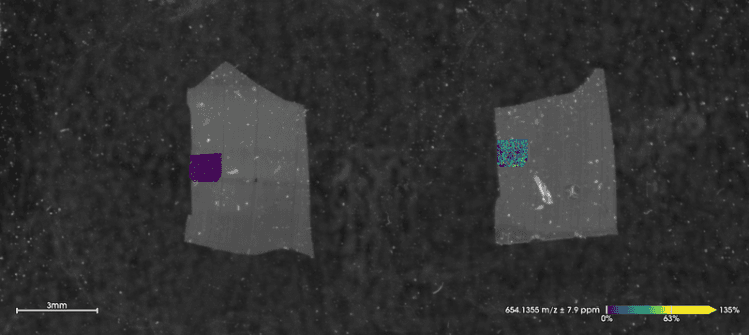
Spatial molecular mapping and compound analysis, run on the real material rather than on a model of it. It answers two questions: what is actually in this sample, and did the cut we intended land. It is heavy work, a full study per material, so it is not a continuous readout.
Enzymes
Cut there, and nowhere else.
Engineered to act at defined points and leave the rest of the material intact.
Separation
Recover what comes free.
Recovering the parts once they are released is its own problem, and it is ours. We are building proprietary methods for it now.
In development
Analytics runs on more than one thing. It reads the blended material that devulcanisation hands over, and it is sold today to tyre developers who want to see how a brand-new compound behaves, which never touches a recovery line.
In practice
What an enzyme does to a rubber network
End-of-life tyres are the first material we have taken this to. Vulcanised rubber is a network of sulphur crosslinks tying polymer chains to each other, and opening that network without destroying what it holds is the step this technology solves. Getting individual materials back out of it takes two separate acts, and only the second one is biology.
- Polymer backbone
- Sulphur crosslink
- Recovered fragments
A vulcanised network
Vulcanisation ties the polymer backbone chains to each other with sulphur crosslinks. Those crosslinks are what make a tyre a tyre: one continuous, insoluble network that will not melt and will not dissolve.
Devulcanisation breaks the crosslinks
The sulphur bridges between chains are broken, and the network comes apart into free polymer chains. The chains themselves are largely left intact, which is the whole point: nothing of value has been destroyed to get here.
Enzymes cleave the chains
Engineered enzymes are designed to cut at defined points rather than at random. Where a thermal process breaks the polymer wherever heat happens to reach it, selectivity means the pieces are known before they are made.
Where we are
What we have shown, and what we have not
AKIN's proprietary enzyme variants have demonstrated breakdown of polyisoprene at benchtop scale. Work on end-of-life tyre material is ongoing.
Enzyme activity on polyisoprene standards, at benchtop scale
The reference material, in the laboratory. Not yet on tyre rubber itself.
Kinfinity Imaging is in commercial use
Available since 2023 as Kinfinity Imaging
An improved enzyme variant has been developed
It is the variant that recovery at scale depends on.
Patent filed April 2026 · bench scale
Spatial molecular mapping, using MALDI-MSI, records a full mass spectrum at every point across a section and reassembles them into a map. The image here is a real result, on real end-of-life material.
MALDI-MSI: matrix-assisted laser desorption/ionisation mass spectrometry imaging.
The products
Two products carry this work
Kinfinity Recovery
Biorefinery and Separation
A rubber biorefinery that returns individual materials, built to attach to an existing devulcanisation plant.
Kinfinity Imaging
Analytics
Conventional analysis gives averages. This gives location: what sits inside a sample, and where.