Kinfinity Recovery
One mixed stream in. Four materials out
Kinfinity Recovery is designed to refine mixed recovered rubber into four materials, each sold against its own specification: natural rubber, recovered carbon black, isoprenoids and synthetic rubber.
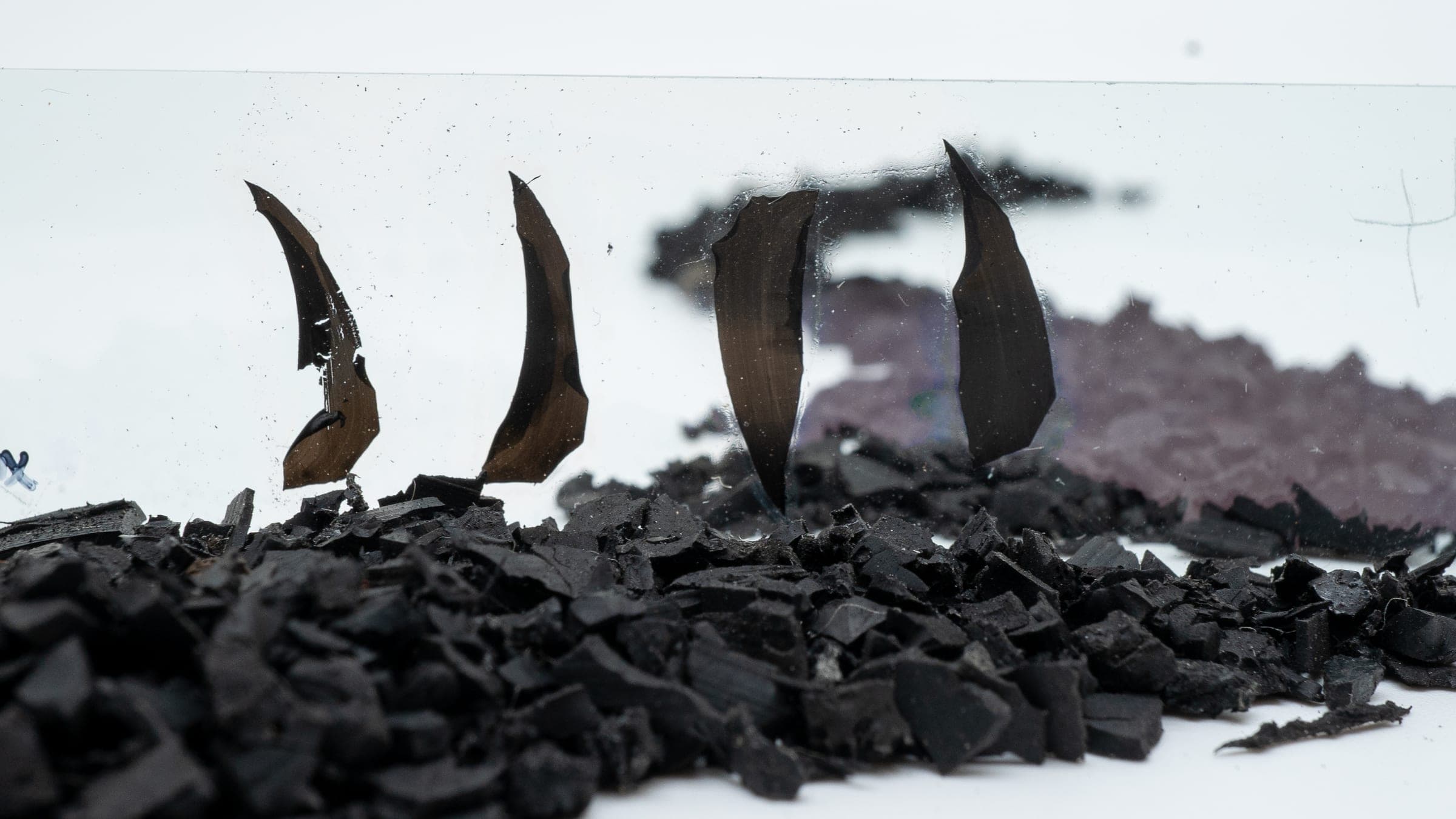
What goes in, what comes out
What leaves is materials, not a better blend
If you run a recycling line
Recovery is designed for brownfield integration. No new plant is required. It sits at the end of an existing devulcanisation process to enhance what recyclers already produce.
If you buy material
Separation is enzymatic rather than forceful, so each fraction comes out largely intact and can be sold against a specification instead of trialled blind.
- End-of-life tyresCrosslinked network
- Devulcanised mixOne blended material
- Natural rubber
- Carbon black
- Isoprenoids
- Synthetic rubber
- End-of-life tyresCrosslinked network
- Devulcanised mixOne blended material
- Natural rubber
- Carbon black
- Isoprenoids
- Synthetic rubber
Existing plant
Devulcanisation
- What runs here
- Shredding, steel and textile removal, and then the sulphur crosslinks between the chains are broken. Devulcanisation frees the polymer chains and hands over one blended material.
- What it hands over
- Devulcanised rubber arrives as an entangled network of polymer chains with everything else the tyre contained distributed through it. It is a diverse mix that the process upstream cannot control, and it is priced as one.
- What Recovery asks of it
- Nothing is replaced. Recovery is designed to be appended at the end of an existing devulcanisation line and to work on what that line already produces. The commercial consequence is the point: the capital question becomes an upgrade decision rather than a new-facility decision.
Partnership
Build this with us
Recovery needs partners rather than customers: recyclers with a devulcanisation line, tyre companies willing to qualify the output against their own specifications, and strategic investors who want a position in high-value rubber recovery before the EU’s Ecodesign rules and digital product passport for tyres arrive in 2028 to 2029.